

 Princess Diana in Military Suit, 1987 Princess Diana in Military Suit, 1987 |  Princess Diana in Open-Back Dress, 1985 Princess Diana in Open-Back Dress, 1985 |  Princess Diana in Versace, 1995 Princess Diana in Versace, 1995 |  Princess Diana in Catherine Walker, 1985 Princess Diana in Catherine Walker, 1985 |
 Princess Diana in Velvet Dress, 1985 Princess Diana in Velvet Dress, 1985 |  Princess Diana's Hosiery, 1985 Princess Diana's Hosiery, 1985 |  Princess Diana in Stripes, 1991 Princess Diana in Stripes, 1991 |  Princess Diana in Blue Suit, 1993 Princess Diana in Blue Suit, 1993 |
 Princess Diana in Blue Gown, 1996 Princess Diana in Blue Gown, 1996 |  Princess Diana in White Belted Suit, 1996 Princess Diana in White Belted Suit, 1996 |  Princess Diana in Peplum Suit Princess Diana in Peplum Suit |  Princess Diana in Catherine Walker Cream Gown, 1992 Princess Diana in Catherine Walker Cream Gown, 1992 |
 Princess Diana in Blue Suit, 1989 Princess Diana in Blue Suit, 1989 |  Princess Diana in Revenge Dress, 1994 Princess Diana in Revenge Dress, 1994 |  Princess Diana, 1994 Princess Diana, 1994 |  Princess Diana, 1994 Princess Diana, 1994 |
 Princess Diana with Slicked Back Hair, 1995 Princess Diana with Slicked Back Hair, 1995 |  Princess Diana in Black Gown, 1995 Princess Diana in Black Gown, 1995 |  Princess Diana's Hair, 1995 Princess Diana's Hair, 1995 |  Princess Diana 1982 Princess Diana 1982 |
 Princess Diana in Bellville Sassoon Princess Diana in Bellville Sassoon |  Princess Diana, 1982 Princess Diana, 1982 |  Princess Diana in Jacques Azagury, 1985 Princess Diana in Jacques Azagury, 1985 |
 Princess Diana in Elvis Dress Princess Diana in Elvis Dress |  Princess Diana in Yellow Coat, 1989 Princess Diana in Yellow Coat, 1989 |  Princess Diana's Hair, 1988 Princess Diana's Hair, 1988 |

 Oxford cloth, the coarsest shirting, is nonetheless quite soft and comfortable. A more casual fabric, its most natural form is the button-down collar. In colored and patterned Oxford shirts, only the threads running in one direction are dyed, while the others are left white. This gives the fabric its characteristic textured appearance. Pinpoint Oxford is woven likewise, but of finer yarn, and is thus smoother and more formal. Royal Oxford is finer still, and can stand proudly beside a fine wool suit and expensive tie.
 Poplin bears a smoother texture but similar weight, the result of a fine yarn running one way with a thicker one interweaving it. It is soft and comfortable, and often used in more casual shirts. Colors find themselves easily at home here, and it takes sporty patterns especially well.
 Cotton twill, a shimmery diagonal weave, makes for richly textured shirts without sacrificing formality. In herringbone twill, the direction of the diagonals switches back and forth every quarter inch or so, giving the fabric even more depth. When occasion or whim calls for a solid shirt, twill plays the role with panache.
 Finer still is broadcloth, of fine yarn woven so tightly that it gleams. This is the most formal shirting for day-to-day wear. End-on-end broadcloth is that made by interweaving threads of alternating colors for a visual texture so subtle it appears solid from an arm's length away. Thanks to its tight weave, this cloth displays patterns with exquisite precision.
Formal shirts are made of white piqué cotton, which boasts a rich, woven texture. This is the only shirt proper for black tie or white tie, and it is not appropriate for anything else.
Besides pure cotton, all the fabrics above can be found in cotton/polyester blends. These are less expensive, and while they do not look as rich or feel as smooth, they can often be worn without ironing. No-iron 100% cotton shirts offer the rich look of natural fiber with the ease of synthetics, but the good ones are very expensive and the cheap ones irritate the skin. Synthetics fibers get itchy and uncomfortable in extreme heat, i.e. over 95 degrees Fahrenheit. Ironing is really not that much work, and it is the surest way to look and feel good in shirts which are affordable enough that you can stock your closet with a diverse collection of them.
Jennifer Aniston |
 |
| |


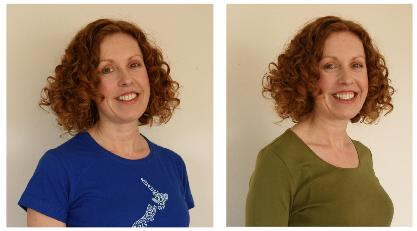
The blue t-shirt "wears the woman", in the photo on the left, making it hard to see her face. By contrast, in the photo on the right you notice the woman rather than the color of her clothes (except, maybe, to note that the whole look is harmonious).
The wrong colors can make you look older, heavier, tired and even ill (of course you could use this to your advantage if you wanted to take a sickie!). The wrong colors also often wear you, so that people see your clothes before they see you (a friend might say “that color shirt is great”).
Not only do the correct colors for you make you look healthier, younger, slimmer and brighter. They also make you feel healthier, younger, slimmer and brighter. Now your friends say "you look great". Color also affects our mood and emotions, our perceived body shape and the overall impression we make on others. So why would you wear anything other than the colors that suit you best?
Seasonal color analysis categorizes people into one of 4 categories...
The categories are named after the seasons and the colors found together in nature to help you remember the range of colors they include. Your seasonal color range will complement the coloring of your skin, hair and eyes.
Understanding a few characteristics of color will help you understand your own coloring and help you make more informed color choices when you buy clothes. Attributes of color include it’s…
Your main seasonal color has these attributes and so do clothing colors. When you know your flow season, to determine if an item of clothing is the correct color for you look for colors with attributes that most closely match your seasonal colors’ attributes. Keeping this in mind helps if you’ve forgotten your swatch or the exact color isn't in your swatch.
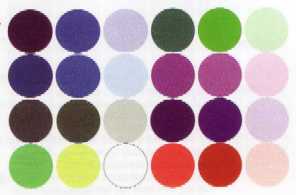
Winter colors are cool, clear and dark to light intensity. Think of the winter landscape colors. In the low light of winter colors appear darker, but on a bright day with the sun reflecting off snow colors appear pale and icy.
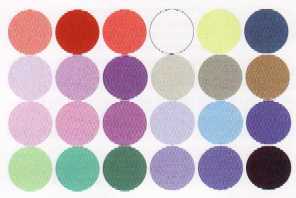
Summer colors are also cool, but muted and medium-light to medium-dark in value. Think of seeing the landscape through a summer heat haze. The colors are muted, paler versions of Winter’s. The light colors are creamy pastel rather than icy.
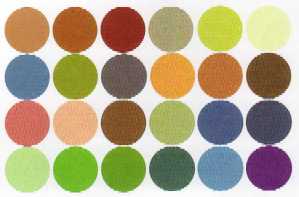
Autumn colors are warm, muted and medium-light to medium-dark intensity. Think of fall New England landscape colors of rich burnt oranges, reds, golden yellows and sludgy greens.

Spring colors are also warm, but clear and bright with medium to light intensity. Think of the bright clear colors of spring flowers and the new season’s clear, bright green shoots.
With the infinite variety of each unique person’s coloring some people don’t fit neatly into one season. So most Image Consultants now use a refined version of the original seasonal color analysis called flow seasonal color analysis.
Flow color analysis categorizes a person as one of 12 flow categories. It recognizes that a person may have coloring characteristics from more than one season. A person still has one primary season, but also has elements of another season—the flow season. The flow season color range takes this into account.
For example, a woman who has dark black-brown hair, dark brown eyes and an olive skin will be mainly Winter, but flow towards Autumn. She will be a Deep Winter. The Deep Winter swatch includes all the main Winter colors and some of the Autumn range such as olive and khaki to complement her skin.
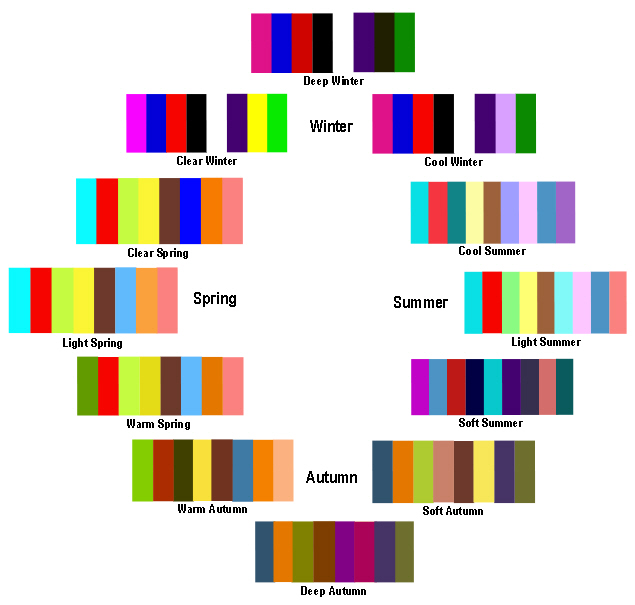
This diagram shows the 12 flow categories and their relationships to the seasonal categories. Flow names reflect the "look" of the flow...
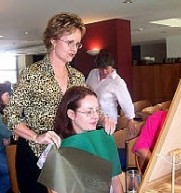
The process involves looking at your overall facial "look" and the coloring of your skin, hair and eyes to determine your flow season. Then using color drapes to establish your main season.
The easiest and most accurate way to find out is to have your colors assessed by an experienced Image Consultant. Find out about my in-person color analysis service by clicking here.
If for some reason you can't get to an Image Consultant the next best alternative is an online color analysis where you supply a good quality photo and answer some questions about your coloring. Contact me to find out about my online color analysis service. Alternatively, as a rough indicator you may be able to assess yourself (or get a friend to help), at least for your main season.

