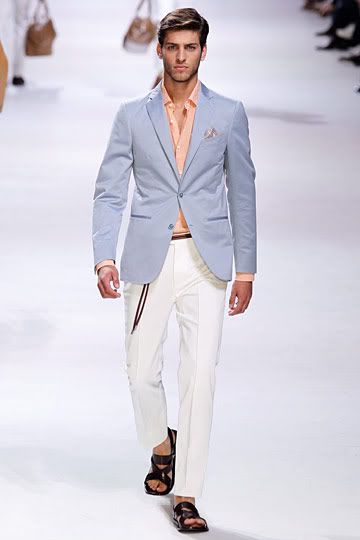
Emenegildo Zegna
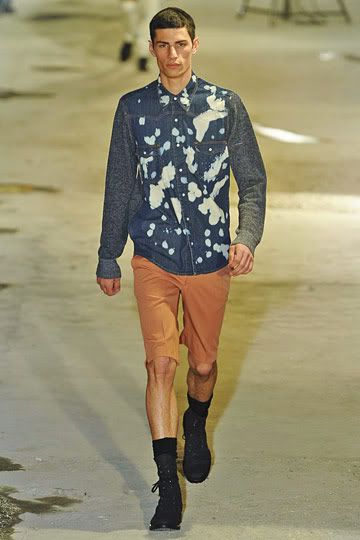
Dries Van Noten
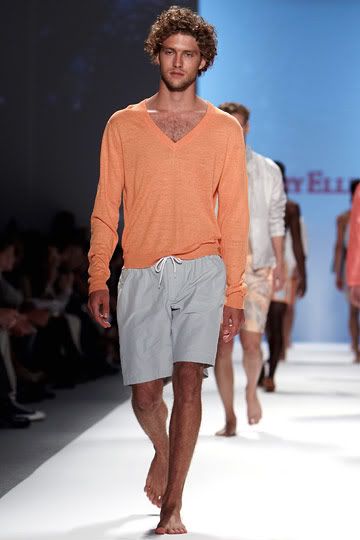
Perry Ellis
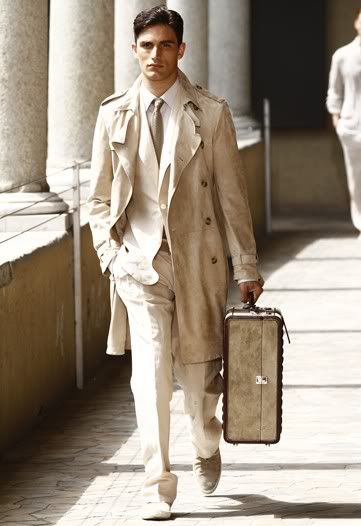
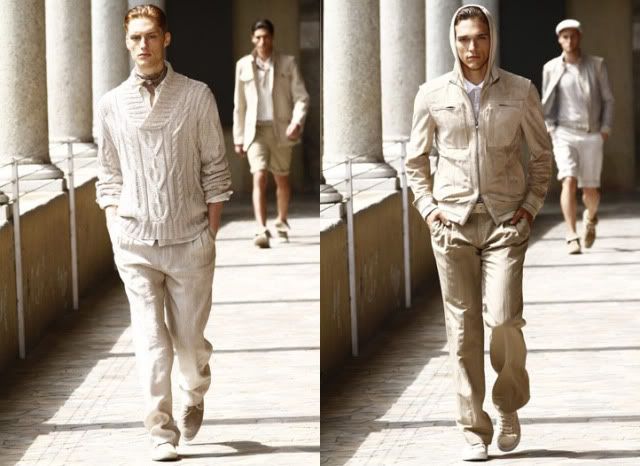
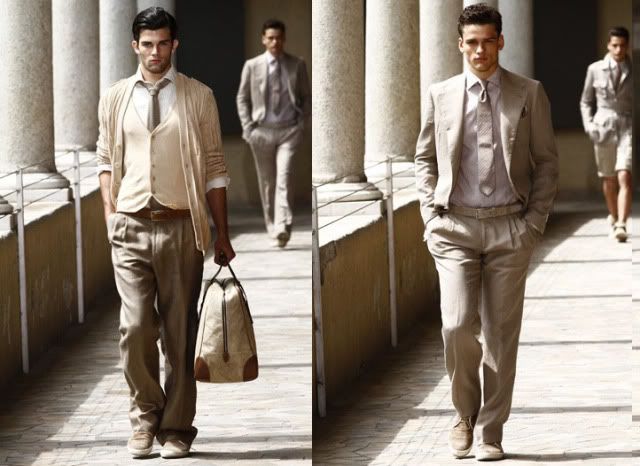
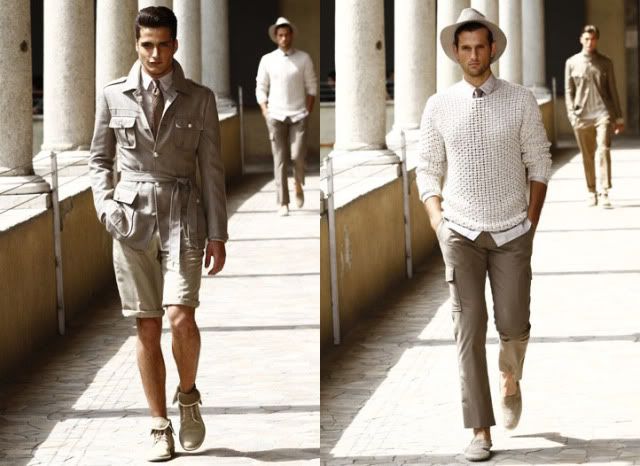
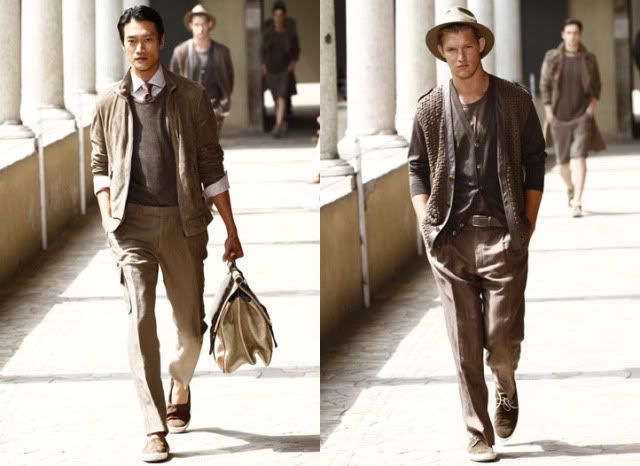
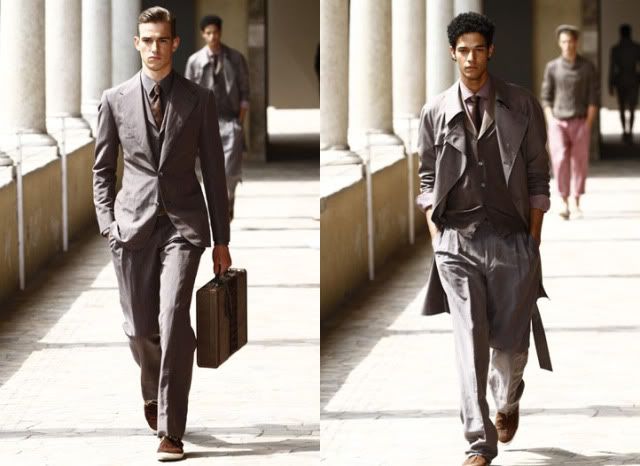
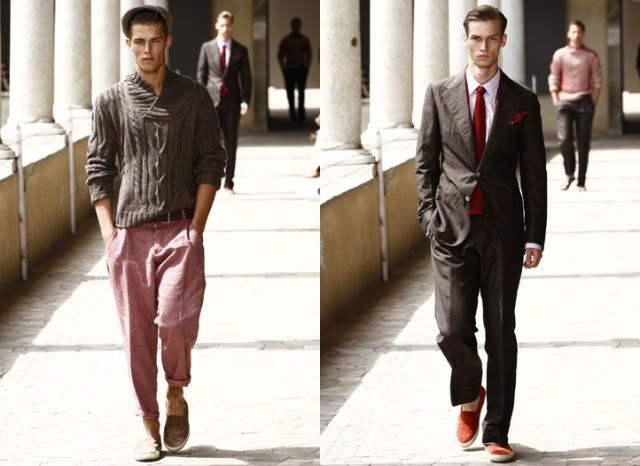
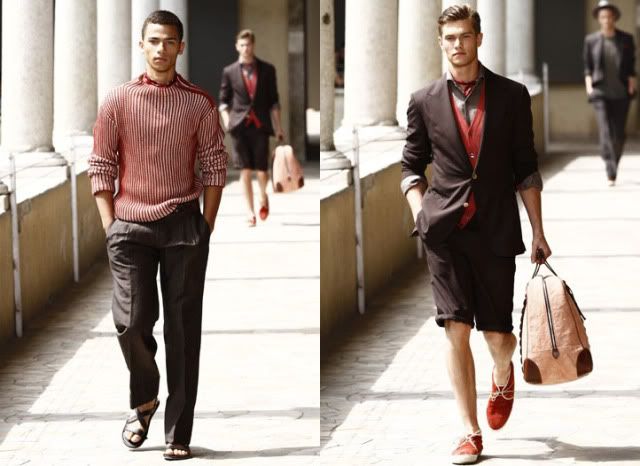
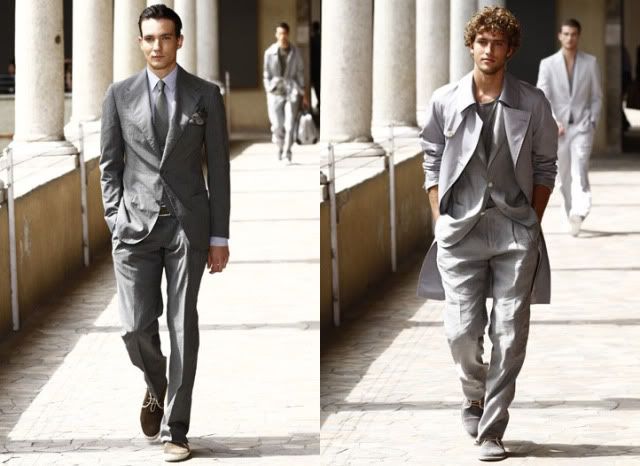
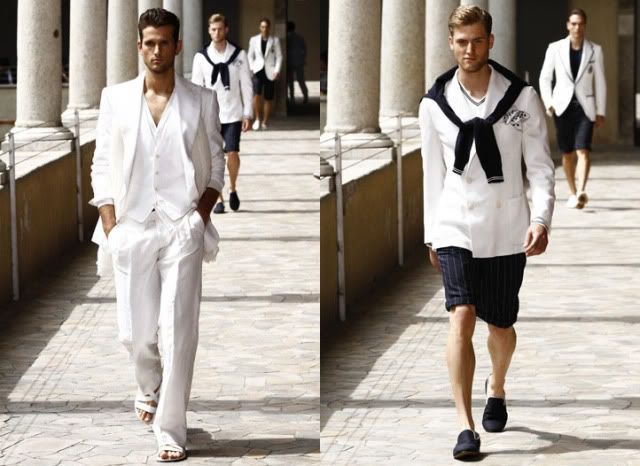
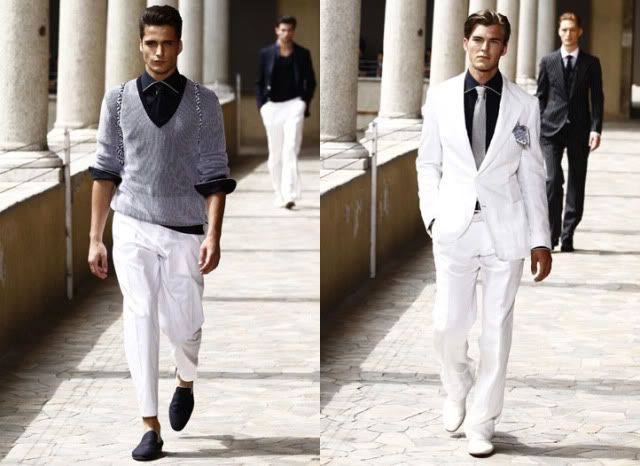
Corenliani's Milan debut collection certainly asserts the Italian brand's position amongst other great designers. The beginning of this collection gives me flashes of classic Tarzan and a "proper" wealthy person's safari (in a good way) then progresses to give potential examples for other gentlemen activities– such as polo or perhaps croquet.
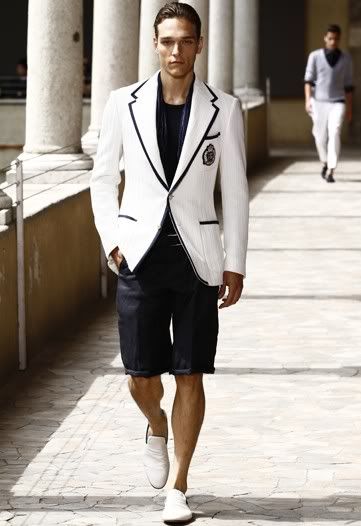
There's this very easy elegance about the collection that keeps every look appealing; I think it's the loose tailoring– there's lots of triple-pleated trousers, roomy jackets, and relaxed knitwear. With an abundance of overall gentleman's versatility, Corenliani's offers pieces that can easily manifest into any gents spring wardrobe.
A man's suit is his statement to the world, a calling card that signals where he is going and where he has been. A custom tailored suit is a reflection of his willingness to pay attention to detail, from the color and texture of the fabric to the selection of a cut that flatters his figure. As you will see, we pay attention to these details so that you can focus on the things you consider important. To learn more about men's custom tailored suits, visit our style guide.
Below are detailed images of our some of our finished men's custom suits.
This is a form fitting, three button, single breasted men's suit crafted from fabric #1-6-33. The jacket has notched lapels, straight flapped pockets, four working sleeve buttons and a single vent. You won't find a deep hued brown such as this in an off the rack men's suit. A handmade suit such as this can take you from the ordinary to the extraordinary.
This is a regular fitting, three button, single breasted men's suit crafted from fabric #1-3-16. The jacket has notched lapels, straight flapped pockets, three working sleeve buttons and a single vent. This medium gray with white beaded stripes is an excellent choice for a 3rd or 4th suit. Not as ordinary as a solid navy blue or charcoal gray suit, it nonetheless is perfectly fine for everyday wear to the office especially for those in finance.
A hallmark of quality workmanship in men's suits is the ability to match a fabrics patterns in the most visible locations on the suit. A lot of times this requires hours of extra work and more fabric on the part of the tailor shop. We feel it's worth it; don't you?
Your jacket lapels should always lay flat against your chest. Here you can see details such as hand stitching in this notched lapel.
Peak lapels on a grey sharkskin jacket (Fabric #1-2-51). Peak lapels are rarely seen on single breasted jackets, yet are a very stylish feature especially for the larger man whose torso takes up a disproportional amount of his body. The wide jacket lapels help bring balance to the presentation, and the vertical lines help elongate a large man's figure. Peak lapels can also flatter an athletic built man as well.
Two of our men's suit jackets turned inside out. Here you can see the detail in the lining, the stitching, and the piping (the bit of fabric decorating the border between the suit's fabric and lining). Also notice the extra buttons (just in case), wide variety of interior pockets, and extra fabric for durability built into the armpits.
On this jacket, you can see that the client asked for a bright red lining. Although a bit flashy, a gentleman can easily keep this secret concealed from the world until he decides to remove his coat in front of others. Then it becomes a conversation starter. That's the beauty of a custom jacket - it is built to your desires and needs.
Working sleeve cuffs are standard on all of our garments. Their purpose? Historically, it was to protect the cuffs when washing or cleaning. Today, it is a subtle sign that the suit is of quality build. Look around, you'll see that the vast majority of off the rack suits do not have this feature.
A bespoke jacket with working sleeve buttons is one thing - that they are individually handstitched is a true luxury that many men overlook. Here you can see the "ugly face" of hand stitching on the back off this custom jacket's button holes (the other side is much cleaner looking). The point - every custom jacket we build is an individual piece of art, hand crafted by a tailor whose attention to detail you can proudly wear.
A man's trousers are designed to not draw attention to themselves; instead, they draw the eyes upward towards the jacket or downward towards the shoes. But just because trousers play a supporting role does not mean we overlooked any details in your pant's construction.
Here you can see another special request, button-fly trousers. Common in jeans, this is much harder to pull off in close fitting dress trousers as that there is no room for an unsightly bulge. All buttons are hand sewn as well!
Here is a different view of a pair of men's trousers, exposing the three fastening in an extended waist strap. The purpose of three fastenings? To evenly distribute the pressure placed on your fastenings as you move throughout the day. The result is a pair of men's trousers that not only fit better but feel better.
Here we can see the interior, specifically the trouser backside. Notice the amount of fabric built into the trousers; this allows adjustment in the case you have a little too much to eat over the holidays.
Another view of the interior of a pair of men's trousers. Here the customer asked for an elastic rubber shirt stay strap around the waist (free upon request, although not recommended). Here we can see the inner lining that goes up the front of the thighs to ensure the fabric drapes properly; additionally we place extra fabric around the crotch area for comfort and durability.
A favorite for travelers, the hidden money/credit card/identification pocket on our custom trousers is something you'll never find on off the rack trousers. Walking through a crowded bazaar, you'll have no need to worry about pickpockets making off with your cash or ID.
Tired of wearing belts? Why not try an elastic band that fits around the back and can tighten your trousers when you need it. A detail such as this is almost impossible to find at any department store - but for our customers side tabs are only a request away.
The interior of our pant's cuffs - notice the extra fabric sewn at the end? A small detail, but one that will help protect your investment from the wear and tear of everyday use.
Our customers come from all walks of life and work in a variety of professions; however they all share the confidence of knowing they look great in the clothing we have helped them create. Do you feel this way in your suit?
|
 Contrary to popular belief, men's dress clothes should always be comfortable. If they are not, it is the fault of the clothes' fit, and not of their nature. Suffering for beauty's sake does not do a man any good, eithe; if the fit of a garment makes its wearer uncomfortable, he will look it. Indeed, a man looks his best when his clothes fit so well he barely notices them. On the other hand, if they are too tight, they will be pulling and choking at every turn; too loose, and a man looks like he has had to borrow some clean clothes from his older brother as he struggles to keep them out of the way. A man's clothes send a message to the world about him, and if they fit him well, he will always make a good impression.
 that designers and commentators may debate whether baggy or fitted pants are 'in' this season while neither look as good as the timeless middle-ground. A good deal of men still rely on women to hold their hands through shopping trips, but since the prerogatives of fit are altogether different for women's clothing, the results are often sorry. Finally, when you are buying a garment, the retailer has little incentive to tailor it properly, since nobody seeks out a mall store because he's heard they do great alterations. Thus as in so many things, it falls to each man to take responsibility for the fit of his own clothes, and not to be swayed by the prolific selection of poor choices or the dubious influence of models, salesmen, and the opposite sex.
 The bottoms should touch your shoes' uppers, but of course must not touch the ground. The most standard length brushes the top edge of the sole at the back, for a slight break in the front. Shorter pant legs, just brushing the tops of the shoes, can look better on the shorter man, and also allow one to show off his socks and shoes should he care to do so. Additionally, men under 5'9" do better without cuffs on their trousers, but should they want them they should be in proportion to their stature, 1¼"-1½", while men over six feet take cuffs 1¾"-2".
 If a jacket, meanwhile, is to have any hope of looking good, it must fit correctly in the chest and shoulders. When you stand with your jacket buttoned and arms hanging loosely at your sides, the jacket's lapels should lie flat against the front panels, the buttons should hang close to or rest lightly on your stomach, and your biceps should just barely break the drape of sleeve from shoulder. Of the many other factors involved in fitting a jacket, the chest and shoulders are the most important and the hardest to alter. Your shirt should always be tighter than your jacket, lest you end up with clumps of fabric which have no place to go. The cuffs should protrude ¼"-½" from the jacket's sleeves when you stand with arms hanging; the collar should cover ½"-1" of your neck above the jacket collar. There is of course much more to say about the fit of these and other garments; these points are intended merely to illustrate the basic idea of fit.
 Let me note here that buying clothes that fit means buying clothes that fit your body, as it is, and not measuring them to an idealized vision you have of yourself. Many men, when getting measured for a suit, will stick out their chests and stretch their spines, striving toward some idealized masculine figure. Unless this is how you stand normally, though, this is not how you should be measured. You can round your height up an inch on your driver's license, but you only hurt yourself by embellishing for your tailor. Similarly, in certain cultures where weight loss is an obsession, some men succumb to the folly of 'buying skinny.' That is, they buy clothes one size too small, anticipating a perfect fit when they lose weight. This is a dangerous proposition, both for one's bank account and one's self-esteem, and it is also misguided. Almost any shirt, sweater, or jacket that fits you well will still fit well if you gain or lose ten pounds. Pants are the most sensitive, but even these will withstand small fluctuations. When your waistline does shrink or grow by a half inch or more, they can easily be altered, often several inches in either direction. Unless you are still going through puberty, you have nothing to gain by selecting clothes which do not fit your body as it is today.
 |
 |
 |
 |
 |
 |
 |
 |
 |
 |
 |
 We are hard-wired, for survival, to recognize faces from the moment we can see. When we're older, even if we don't remember a name we may recognize the face of someone we've met before.
 Since others spend so much time looking at our face it makes sense to present it in the best light possible!
When you know your face shape you can choose your most flattering hairstyles, hats, eyeglasses, sunglasses and earrings.
There are a few approaches to this. You will need...
A mirror large enough to see your whole face
It may help to have a photo of your face. Pull your hair back away from your face and make sure the photo is taken square-on to your face, so you can see both sides. If you're taking the photo yourself, for example with a cell phone camera, make sure the camera is far enough away that you don't get a distorted, fish-eye effect!
Or, it may help to draw the outline of your face, with your hair held away from your face, on the mirror (make sure whatever you use -- for example, whiteboard marker, eye-liner pencil, lipstick -- will wipe off later!)
Ok, now you're ready to find the shape of your face by answering the questions below...
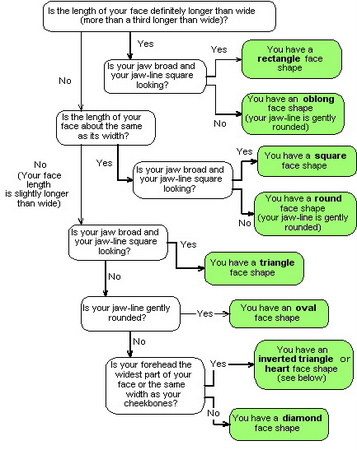
I hope I've structured this questionnaire to make it as easy as possible for you to find your face shape. If you have any difficulty using this format please contact me and let me know what is confusing.
You may discover it's not as easy as you'd think to categorize the shape ofyour face. Each of us has a unique face length-width ratio, jaw, jaw-line and front-on outline. So it's not always a cut-and-dry decision as to which face shape category to choose.
For example, if your face length is definitely longer than wide and you have a broad, square jaw-line then, using the questionnaire above, you will come out as a rectangle. However, if, when looking at your front-on outline (the sides of your face), your jaw is the widest part of your face the triangle category may be a better choice for you. It will depend how definitely your face is longer than wide, do you see your face length first? Or is your jaw more obvious than your face length? Another approach is to combine the recommendations for both shapes.
If, after doing the questionnaire above and looking at the pictures below you're still having trouble determining your face shape ask me to tell you your face shape here.
Use the descriptions below to verify your selected face shape or adjust your choice if needed.
Select the link on your face type to see recommendations for your most flattering hairstyles, eyeglasses, hats, makeup and earrings.
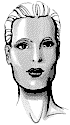
Main characteristics...
Your face is definitely longer than wide
Your jaw is broad and your jaw-line is square
The sides of your face are straight -- your forehead, cheekbones and jaw-line are the same width
Your hairline is most likely straight

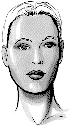
Main characteristics...
Your face is definitely longer than wide
Your jaw-line is softly rounded
The sides of your face are straight -- your forehead, cheekbones and jaw-line are the same width
Your hairline may be rounded
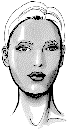
Main characteristics...
Your face is slightly longer than wide
Your jaw-line is slightly rounded
The outline of your face is an inverted egg-shape -- your face is widest at the cheekbones. Your forehead is fairly broad (broader than you jaw)
Your face can be divided into 3 equal horizontal sections between the hairline, eyebrows, end of nose and chin
Your eyes are evenly spaced, with one eye width distance between them
Your face has no extreme characteristics. For example you do not have very small or very large eyes, mouth or nose.
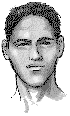
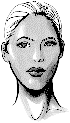
Main characteristics...
Your face is slightly longer than wide
Your jaw-line is long and pointed
Your cheekbones are the widest part of your face. They are often high and pointed
Your forehead and jaw-line are tapered
Your eyes, nose and mouth are well balanced vertically

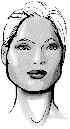
Main characteristics...
Your face is slightly longer than wide
Your jaw is broad
The side of your face tapers from your jaw to your forehead
Your jaw is the widest part of your face and your forehead is narrow
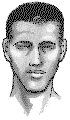
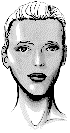
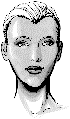
The only difference between the inverted triangle and the heart shaped faces are that the heart has a widows peak.
Main characteristics...
Your face is slightly longer than wide
Your jaw-line is long and pointed
The sides of your face taper from your forehead to your jaw
Your forehead is the widest part of your face, or the same width as your cheekbones
Your jaw is the narrowest part of your face

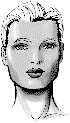
Main characteristics...
Your face is almost as wide as it is long
Your jaw is broad and your jaw-line is square
The sides of your face are straight -- your forehead, cheekbones and jaw are the same width
Your hairline is most probably straight

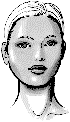
Main characteristics...
Your face is almost as wide as it is long
Your jaw-line is round and full
Your cheekbones are the widest part of your face and round
Your hairline is most probably round


